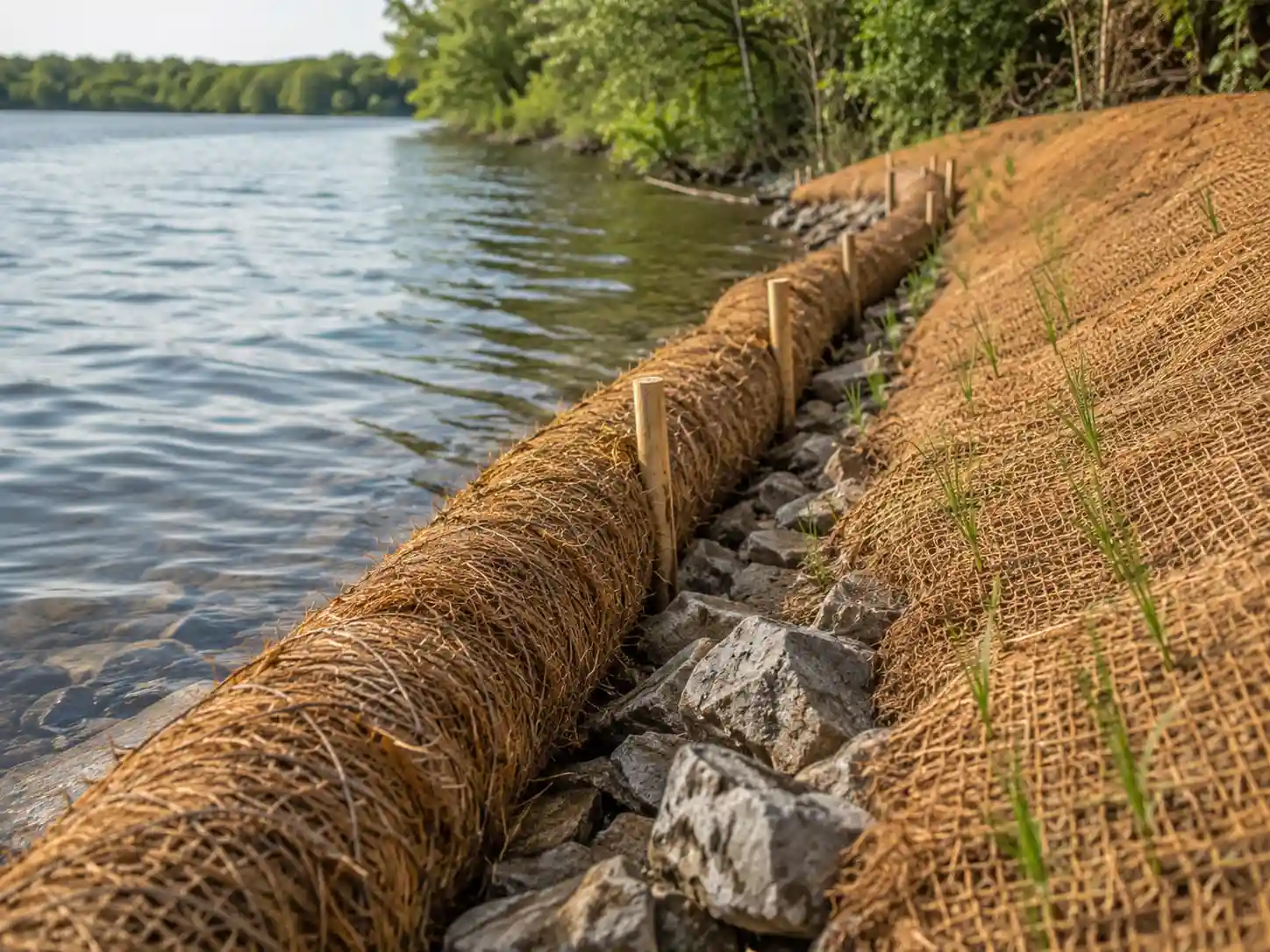
Coir logs are cylindrical erosion control structures made from tightly packed coconut fiber wrapped in natural or synthetic netting. They are designed to stabilize soil in areas exposed to water movement, such as riverbanks, shorelines, slopes, and wetlands.
Instead of acting as a permanent barrier like concrete or plastic-based solutions, coir logs function as a temporary natural support system that helps the environment rebuild itself.
What Coir Logs Are Made Of
Coir logs are produced from the fibrous husk of coconuts, a renewable agricultural byproduct. This fiber is:
- Strong enough to hold soil in place under water flow
- Flexible enough to conform to uneven ground surfaces
- Naturally biodegradable over time
The coconut fiber is compressed into a log shape and secured with netting so it maintains structural integrity during installation and early-stage environmental exposure.
How Coir Logs Work in Erosion Control
Coir logs work by slowing down water movement and reducing the direct impact of waves, runoff, or surface flow on soil.
When installed along a shoreline or slope, they:
- Absorb and reduce water energy before it reaches the soil
- Trap sediment that would otherwise be washed away
- Create a stable zone where vegetation can establish roots
- Prevent further soil displacement during heavy rain or wave action
Over time, plants grow through and around the log, binding the soil naturally. Once vegetation is established, the coir log gradually decomposes and becomes part of the soil ecosystem.
Installation Placement
Coir logs are typically placed:
- Along shorelines to reduce wave erosion
- At the base of slopes to prevent soil runoff
- In drainage channels to slow water flow
- Around newly restored wetland areas
They are often secured with wooden stakes or biodegradable anchors to ensure stability during early-stage exposure.
Why Coir Logs Are Used in Restoration Projects
Engineers and landscapers prefer coir logs because they:
- Provide immediate erosion protection
- Support natural vegetation growth
- Require no removal after establishment
- Are environmentally safe and non-toxic
- Integrate into long-term ecological restoration plans
Unlike synthetic materials, they do not leave behind permanent waste or require future cleanup operations.
The Role of Coir Logs in Long-Term Stability
Coir logs are not intended to be permanent structures. Their purpose is to bridge the gap between exposed soil and fully established vegetation.
In most restoration projects, they serve as the initial stabilizing layer. Once roots take hold, the plants themselves become the long-term erosion control system.
This transition—from structural support to natural stabilization—is what makes coir logs particularly effective in modern environmental engineering.
Conclusion
Coir logs are a simple but highly effective erosion control solution. They combine structural stability with ecological function, allowing damaged landscapes to recover naturally while preventing further erosion during the critical early stages of restoration.
For shoreline protection, riverbank stabilization, and slope management, they offer a practical balance between engineering performance and environmental responsibility.